Restaurants & Mixology
Botanical design as a living language — shaping identity, guiding perception, and structuring culinary journeys.
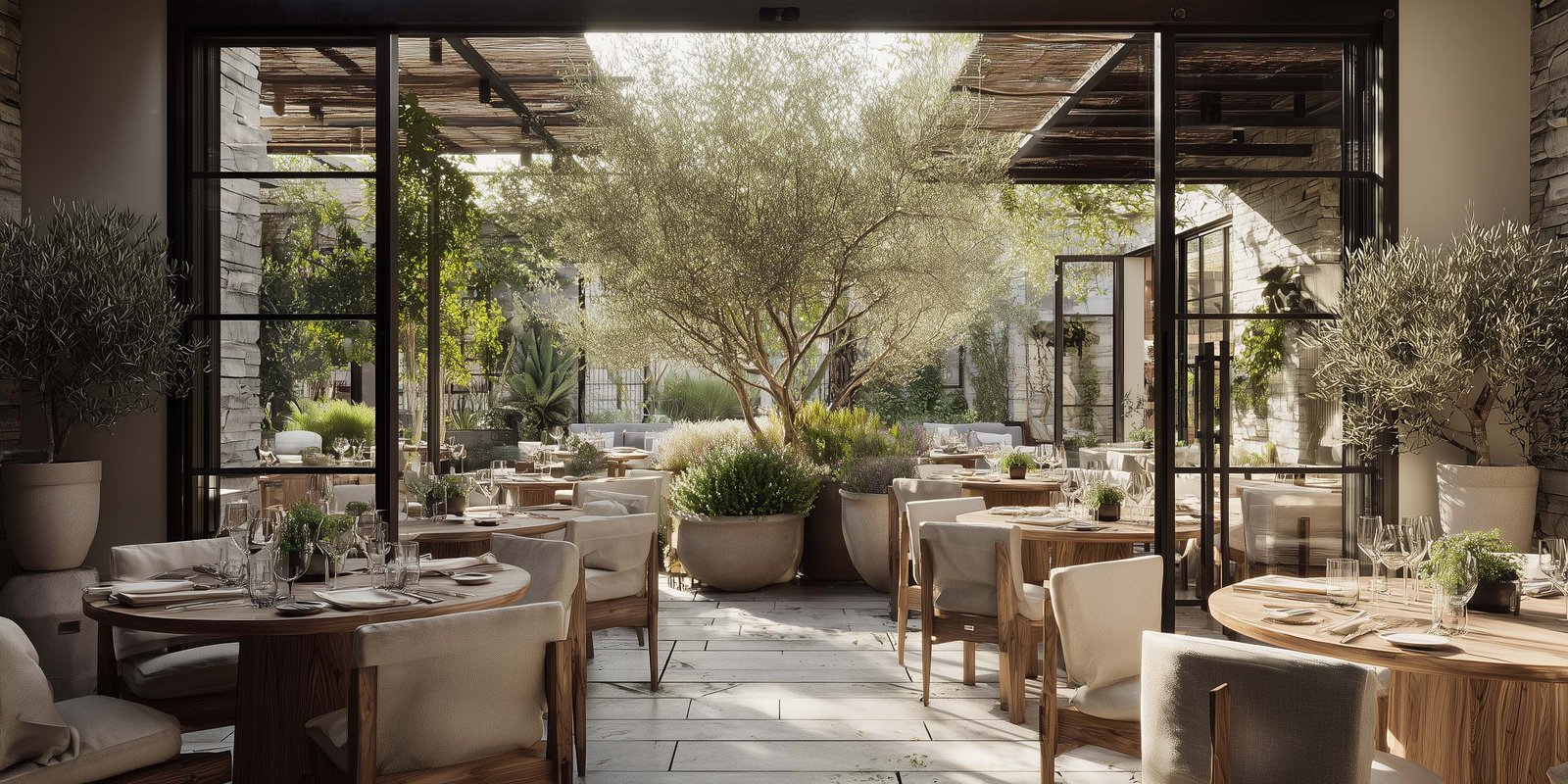
Restaurants and bars are spaces of rhythm — light, sound, circulation and proximity. Botanical architecture supports this choreography rather than decorating it.
Plants, mineral textures and aromatic structures become part of the spatial language, shaping thresholds, framing views and refining atmosphere over time.
Botanical Identity & Signature Spaces
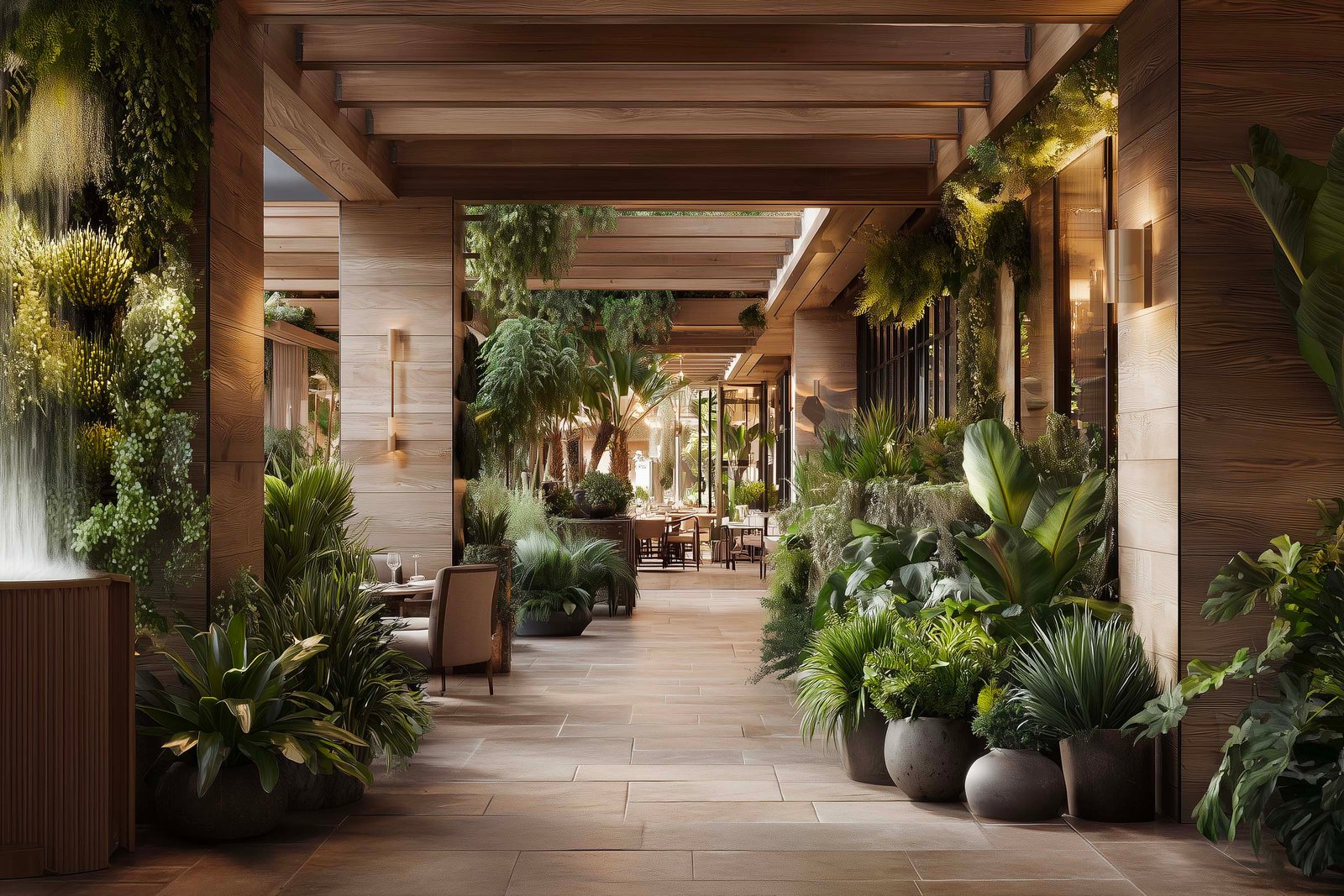
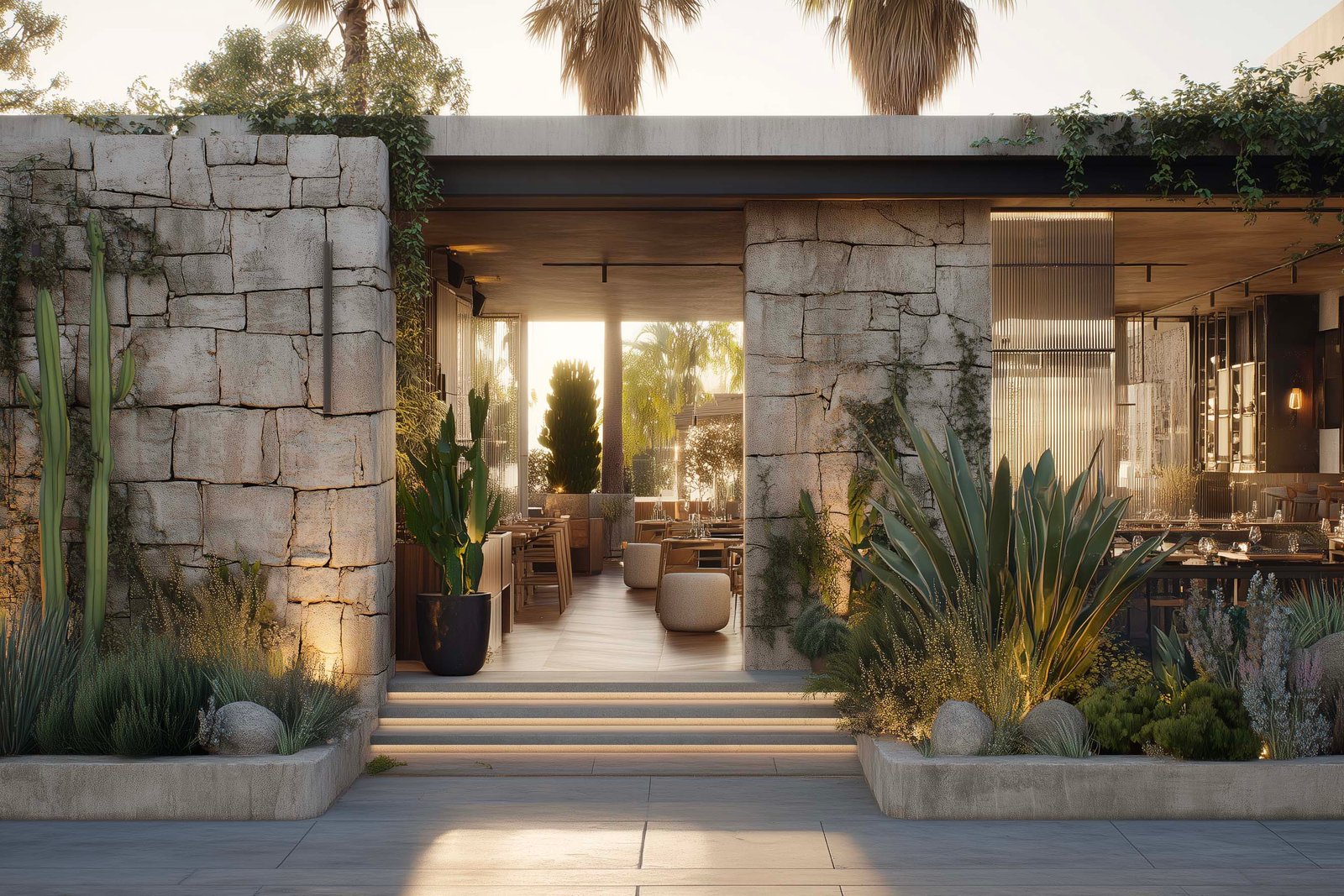
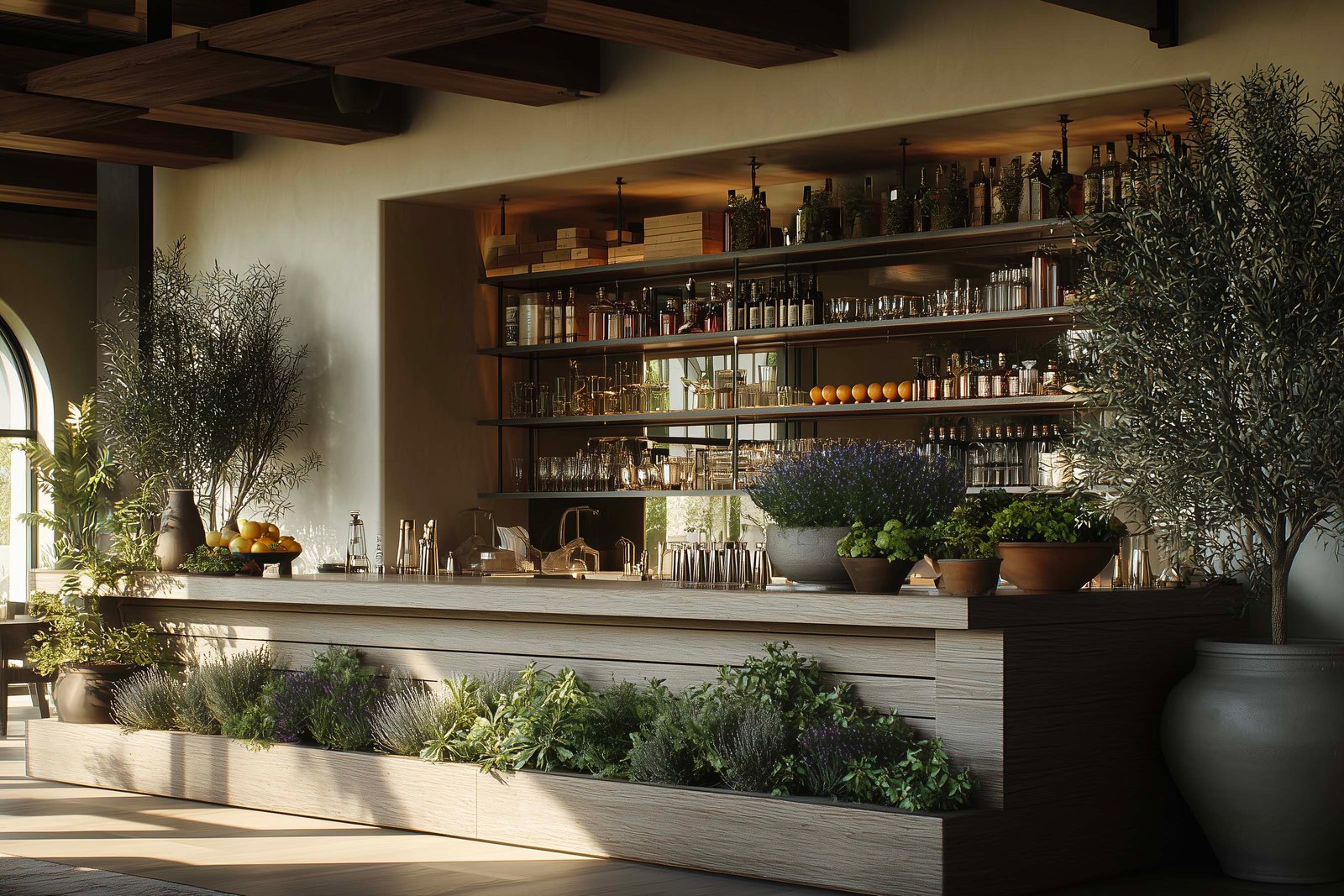
Botanical design establishes the identity of a restaurant through carefully composed signature spaces — entrances, bars, circulation paths and architectural focal points. Plants are not added as decoration; they are positioned, integrated and structured as part of the architectural narrative.
These spaces act as anchors of perception. They guide movement intuitively, create coherence and set the tone of the place. Luxury here is expressed through intention and restraint, allowing living structures, materials and light to speak with clarity and permanence.
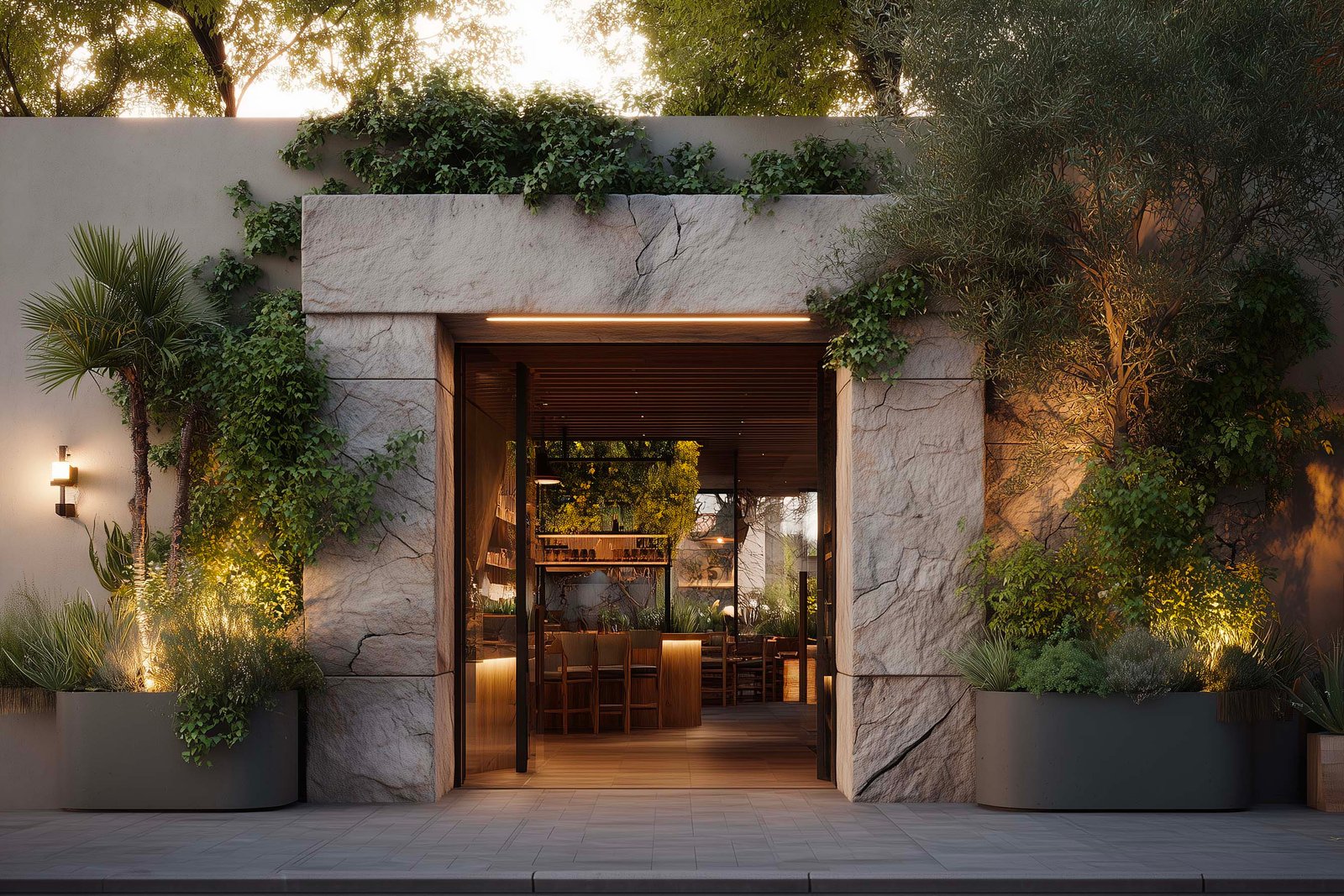
Signature Thresholds
Entrance, bar, and architectural focal points designed as calm identity anchors — the first chapter of the culinary journey.
From Botanical Identity to Culinary Sequences
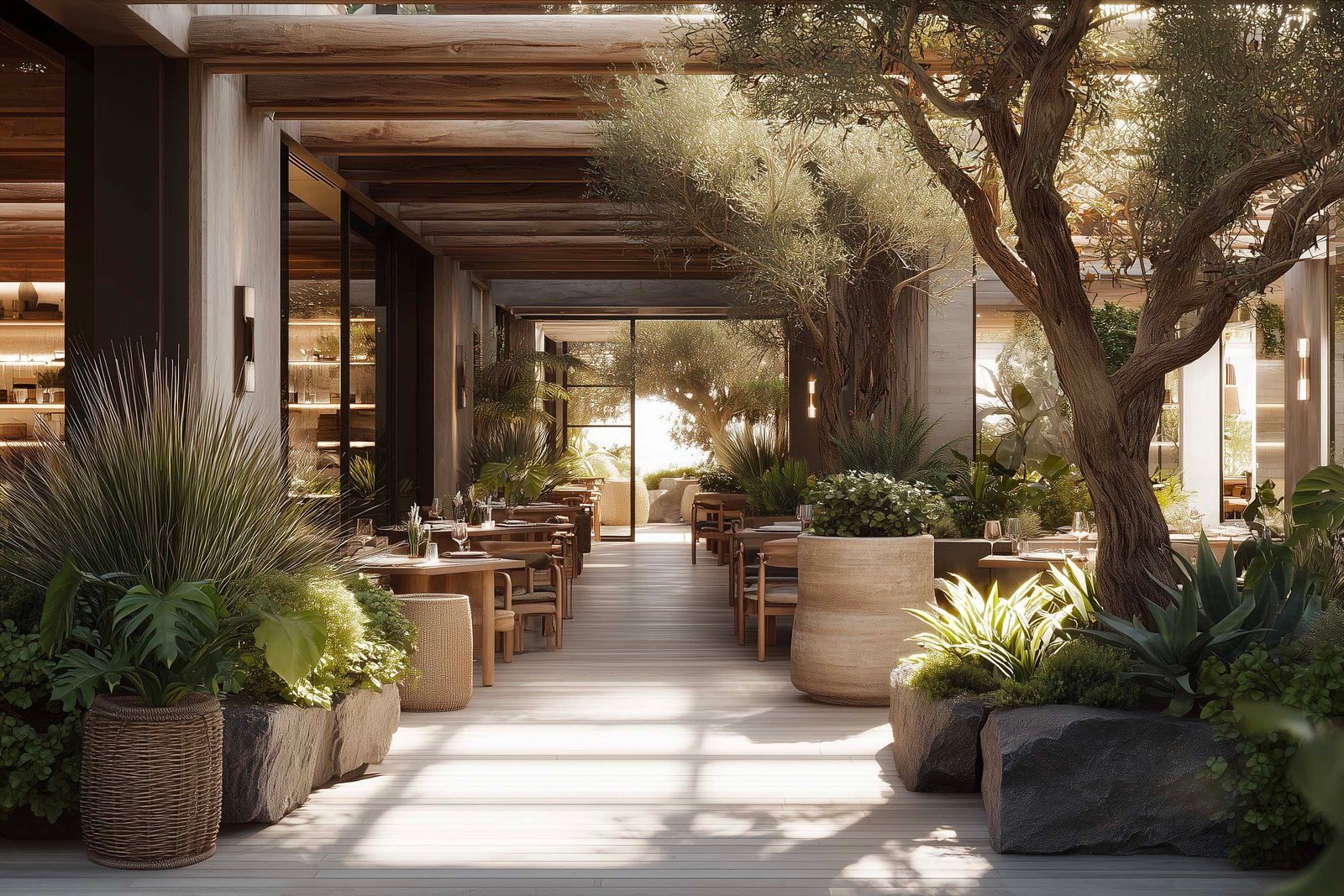
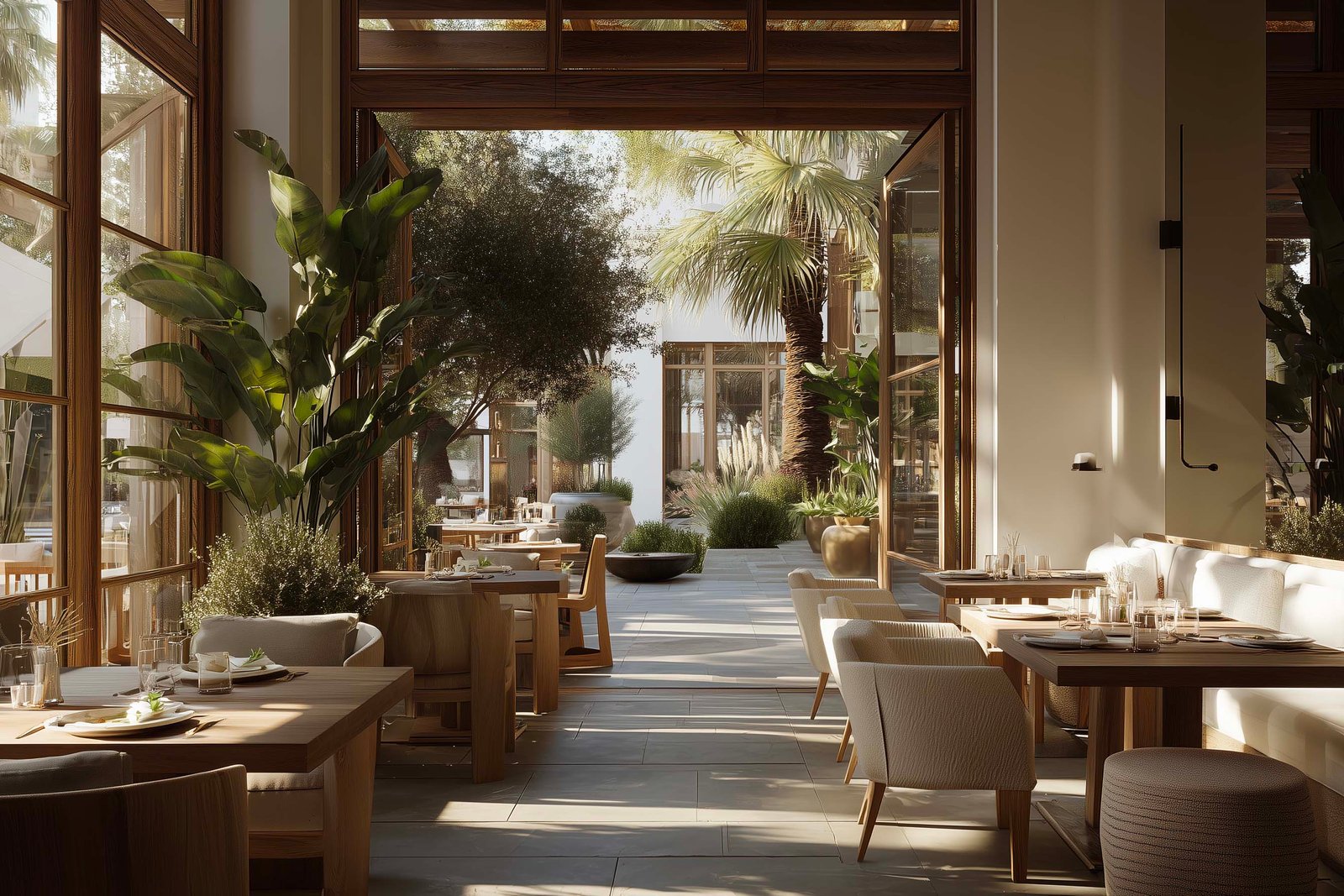
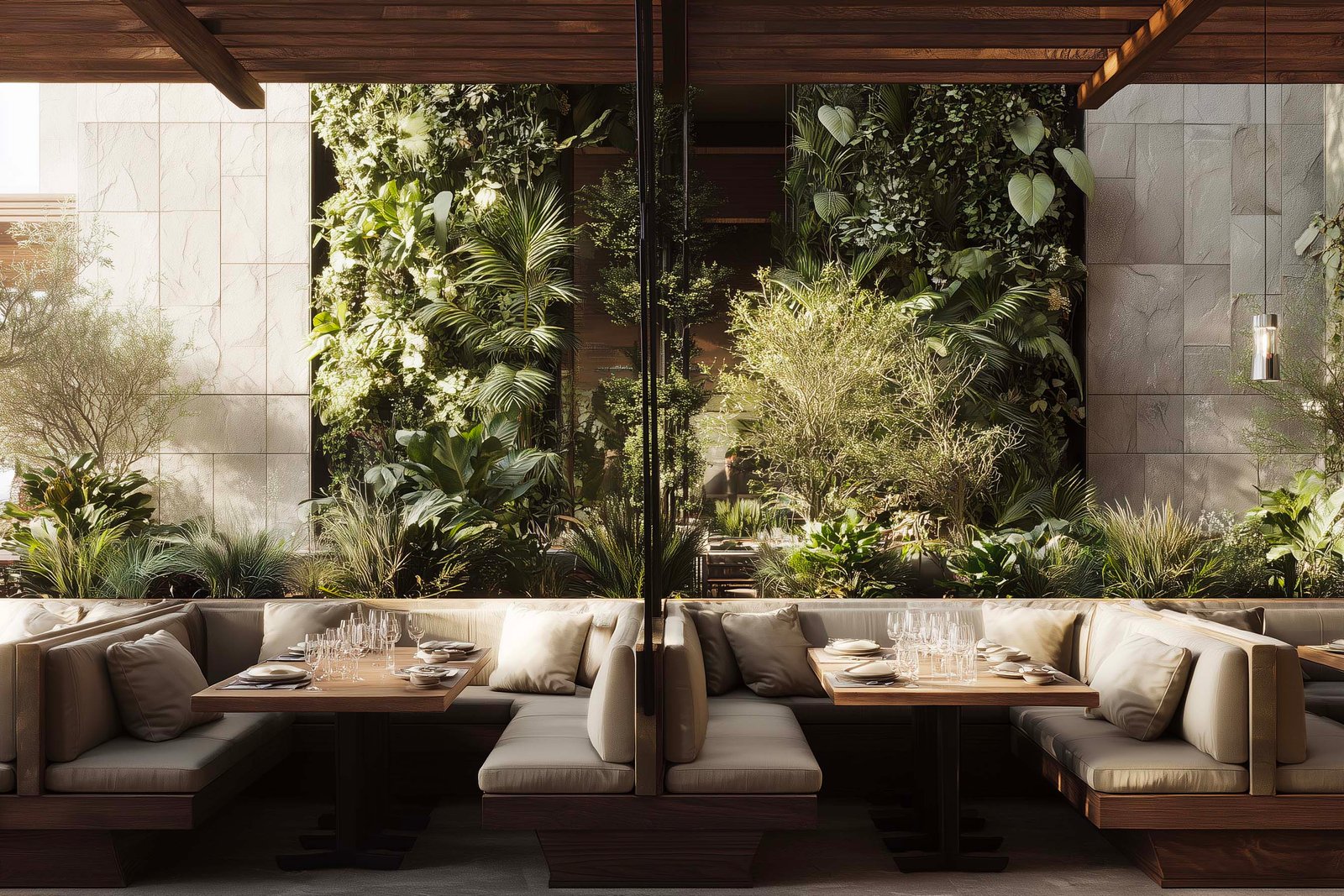
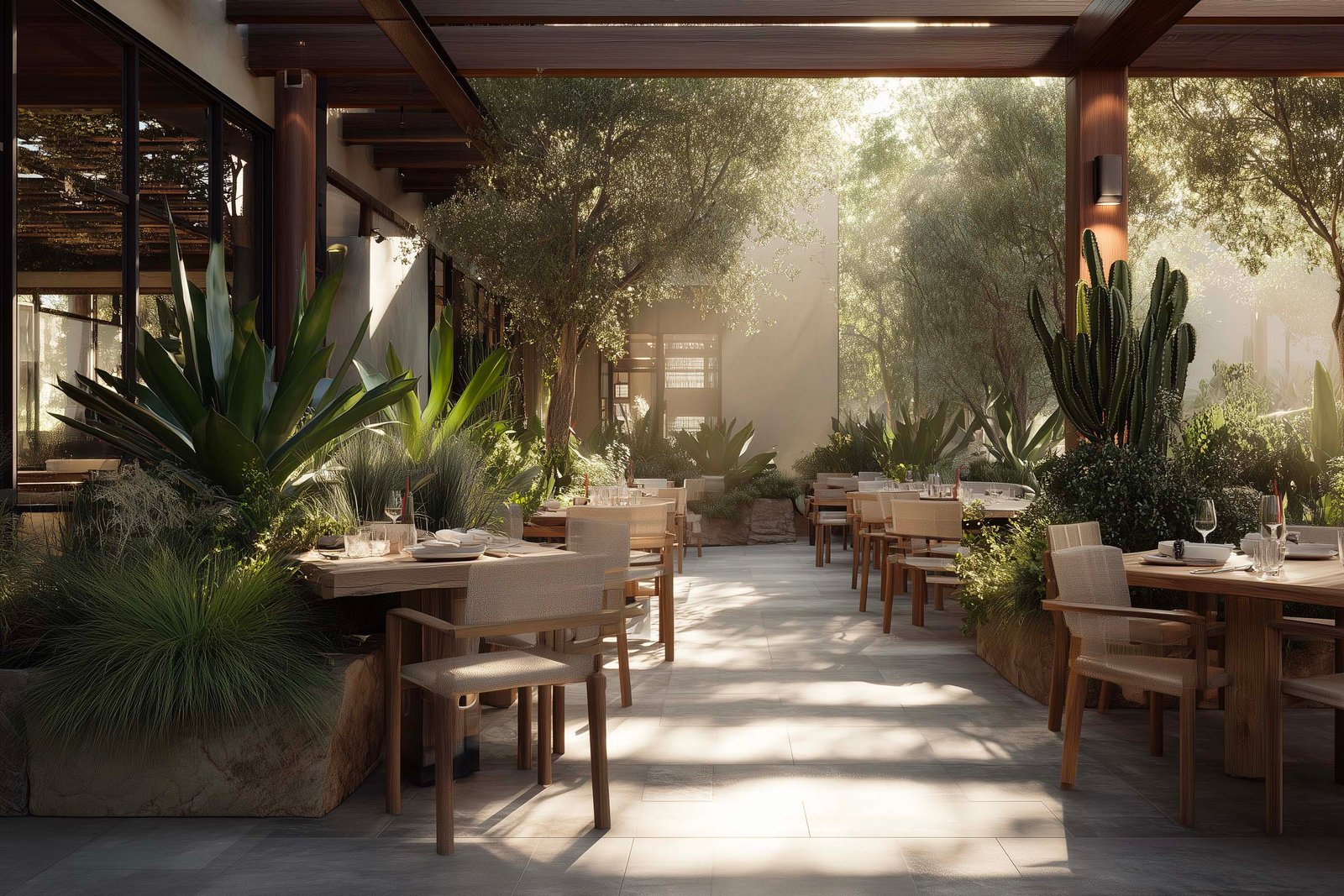
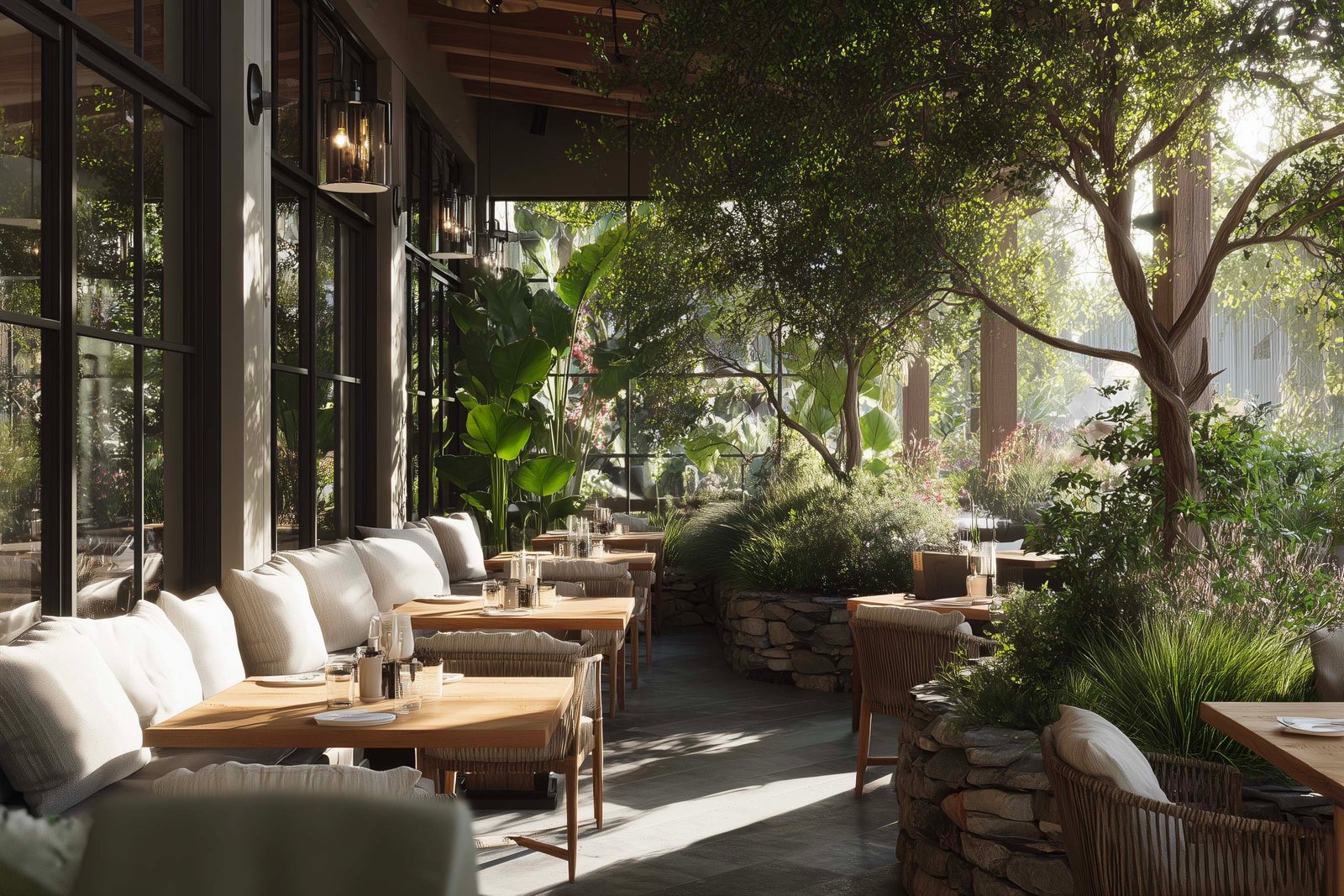
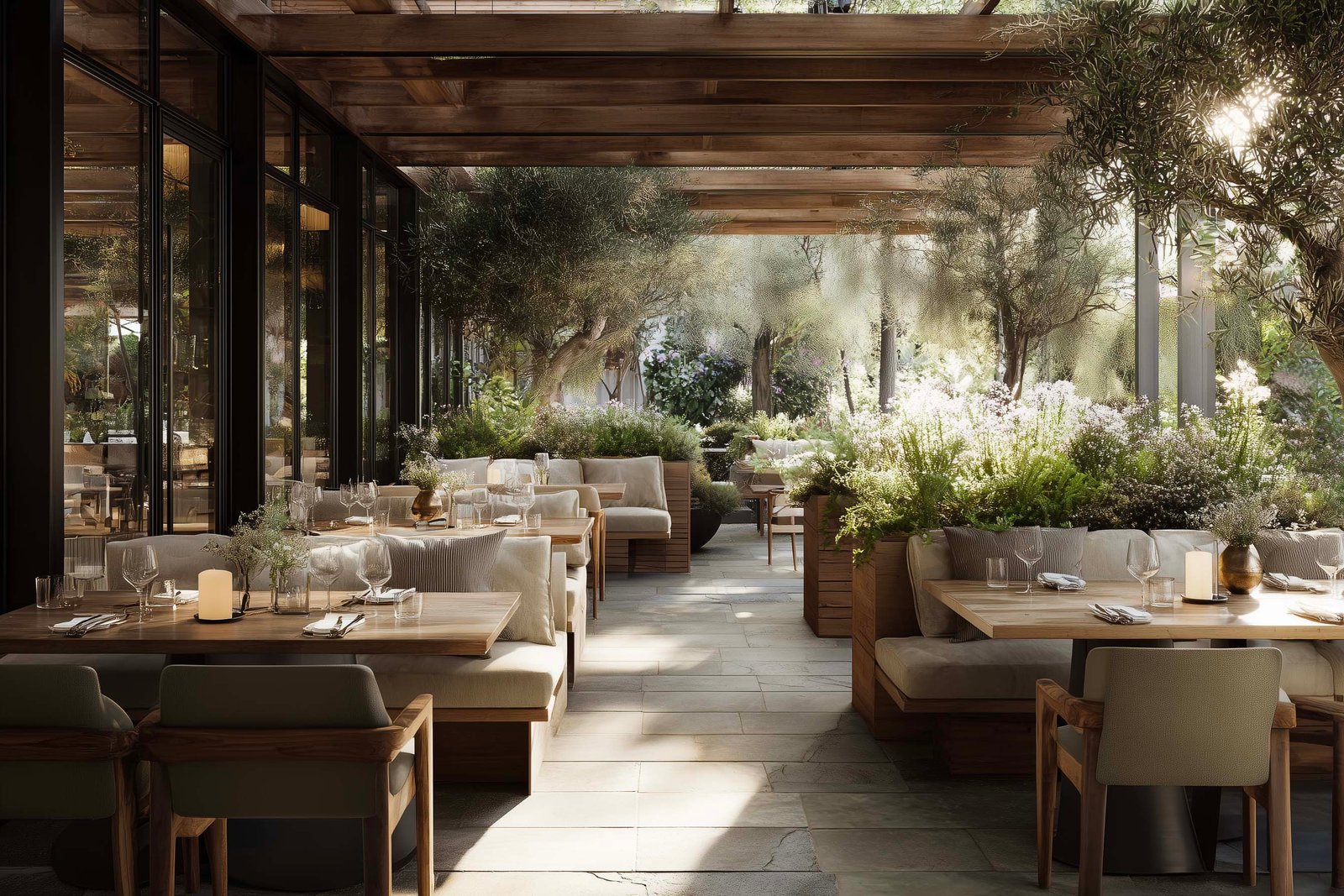
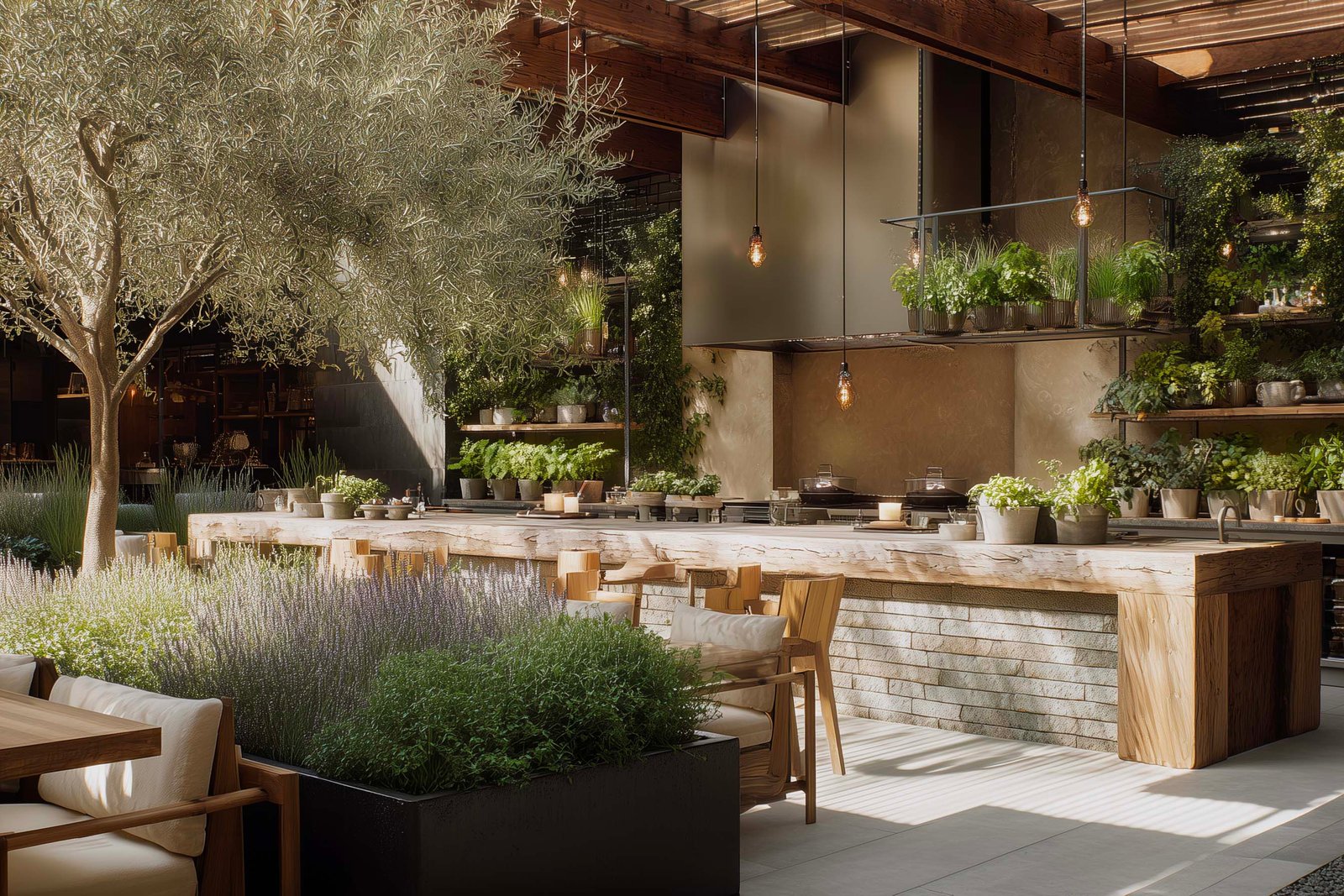
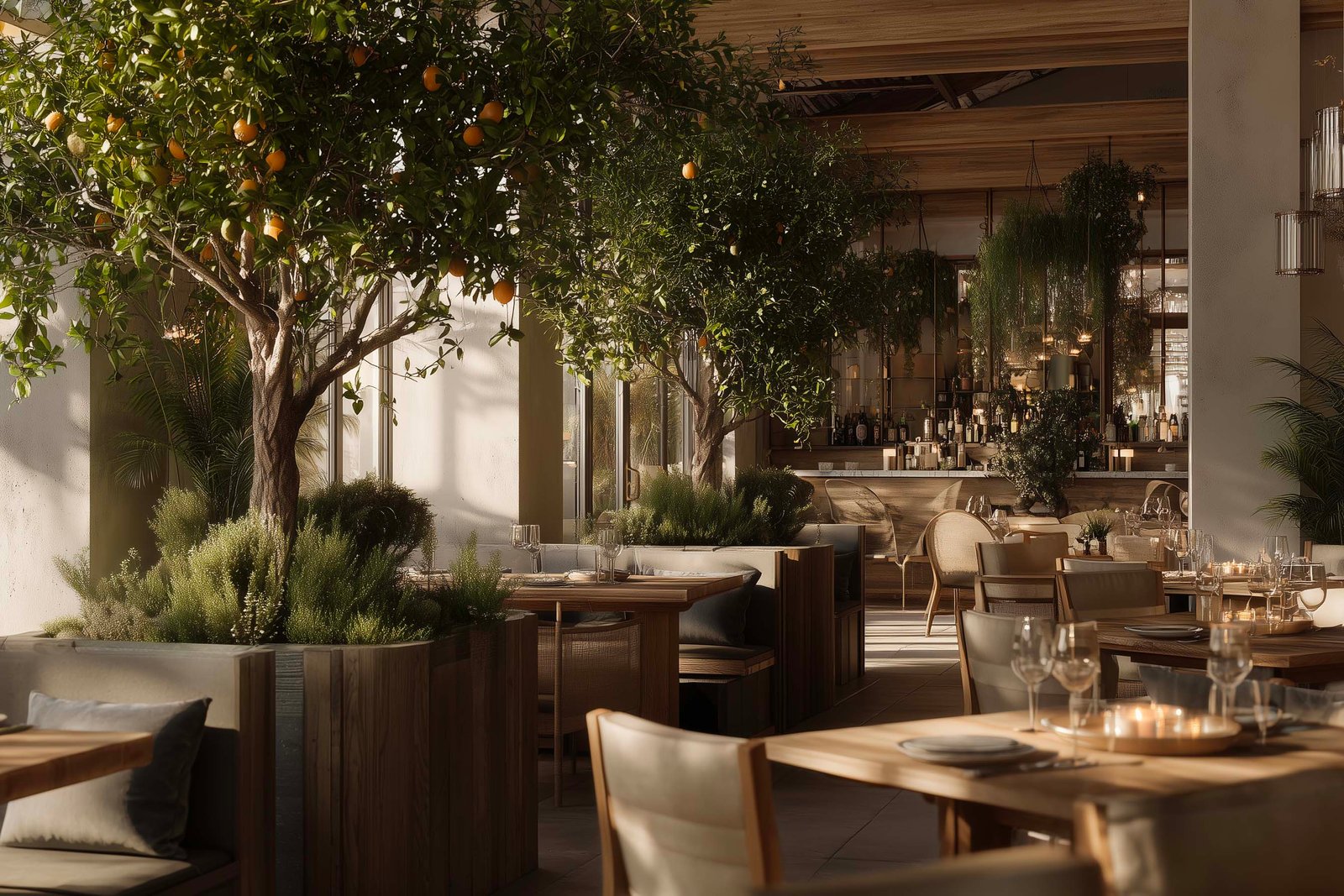
Once identity is established, botanical design extends into dining spaces — interior rooms, terraces, patios and transitional indoor–outdoor zones.
These environments are conceived as continuous spatial sequences. Botanical elements act as connective structures between architecture, cuisine and atmosphere, guiding movement and framing presence without overwhelming the dining ritual.
The result is not a decorated setting, but a culinary landscape perceived and remembered as a coherent whole.
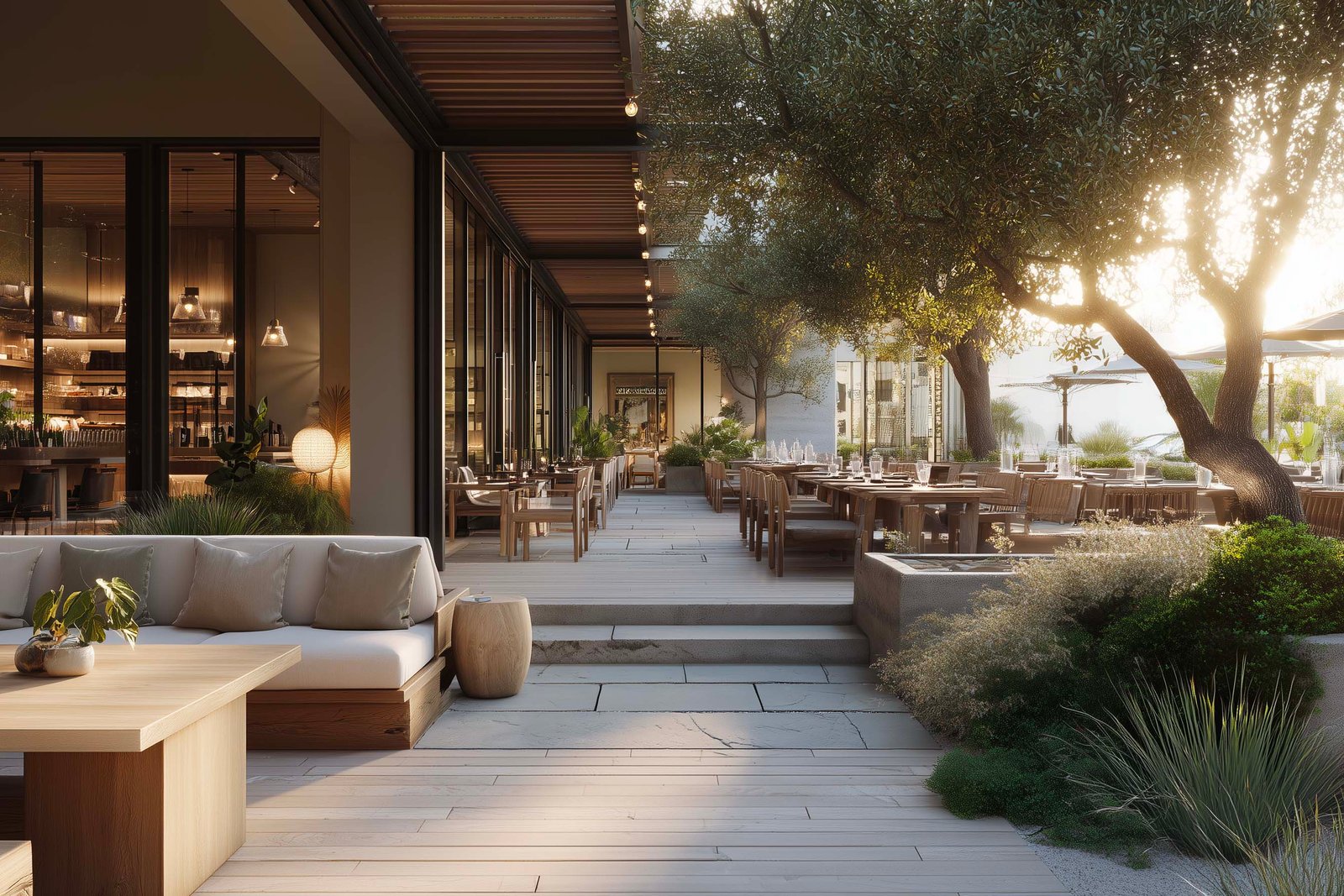
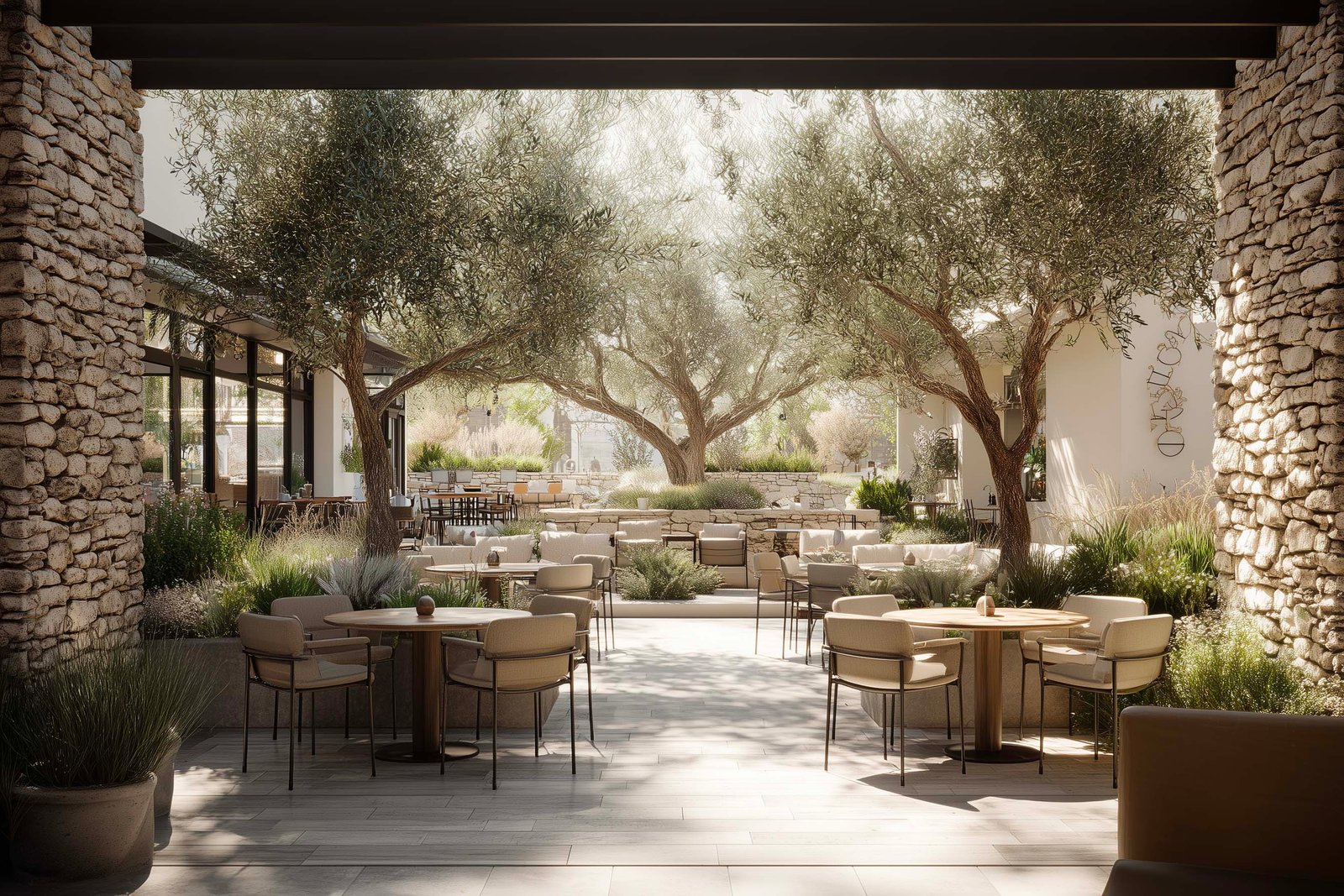
Living Dining Landscapes
Dining rooms, patios and terraces composed as one continuous indoor–outdoor environment — calm, textured, and seasonal.
Culinary Rituals & Interactive Botanical Moments
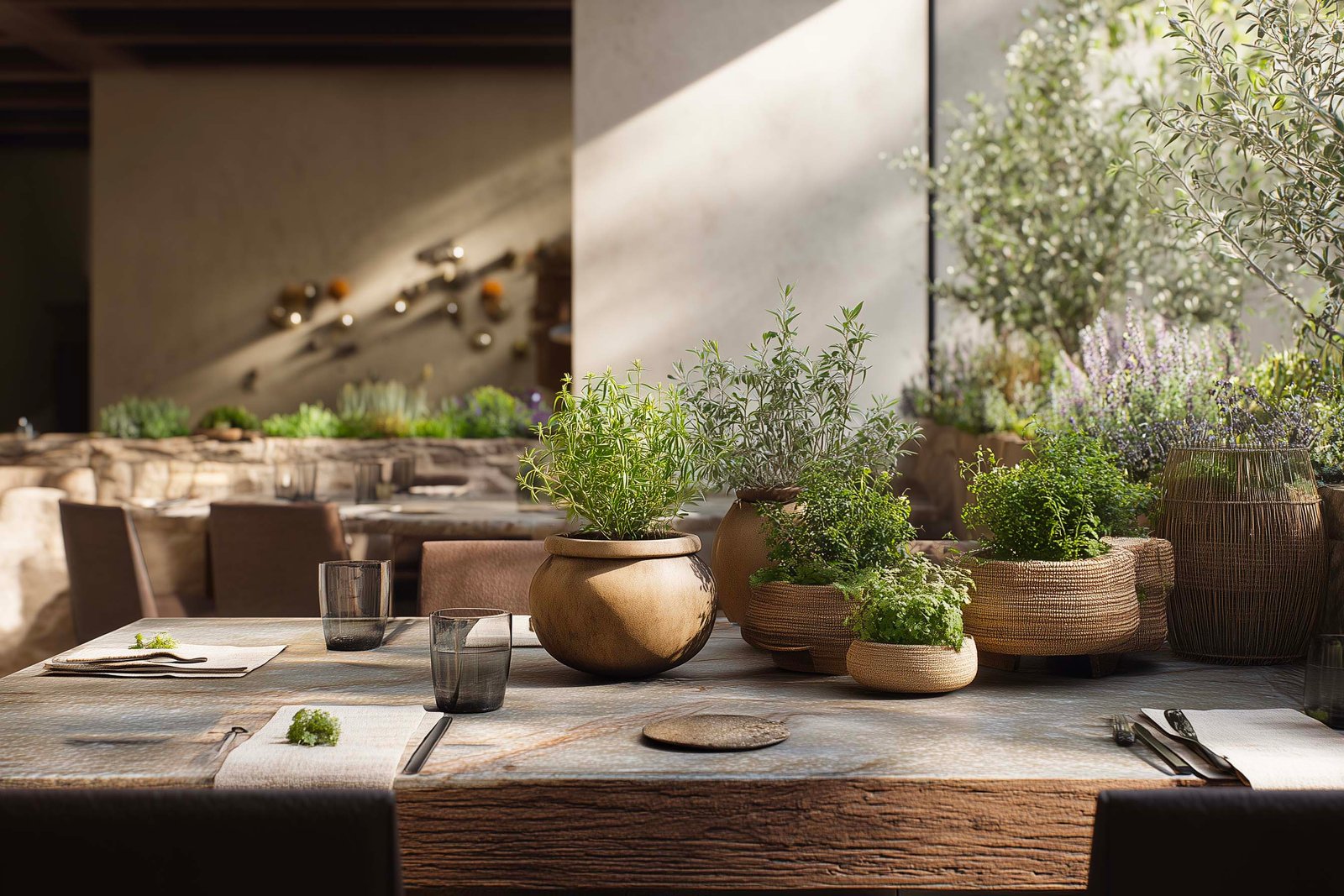
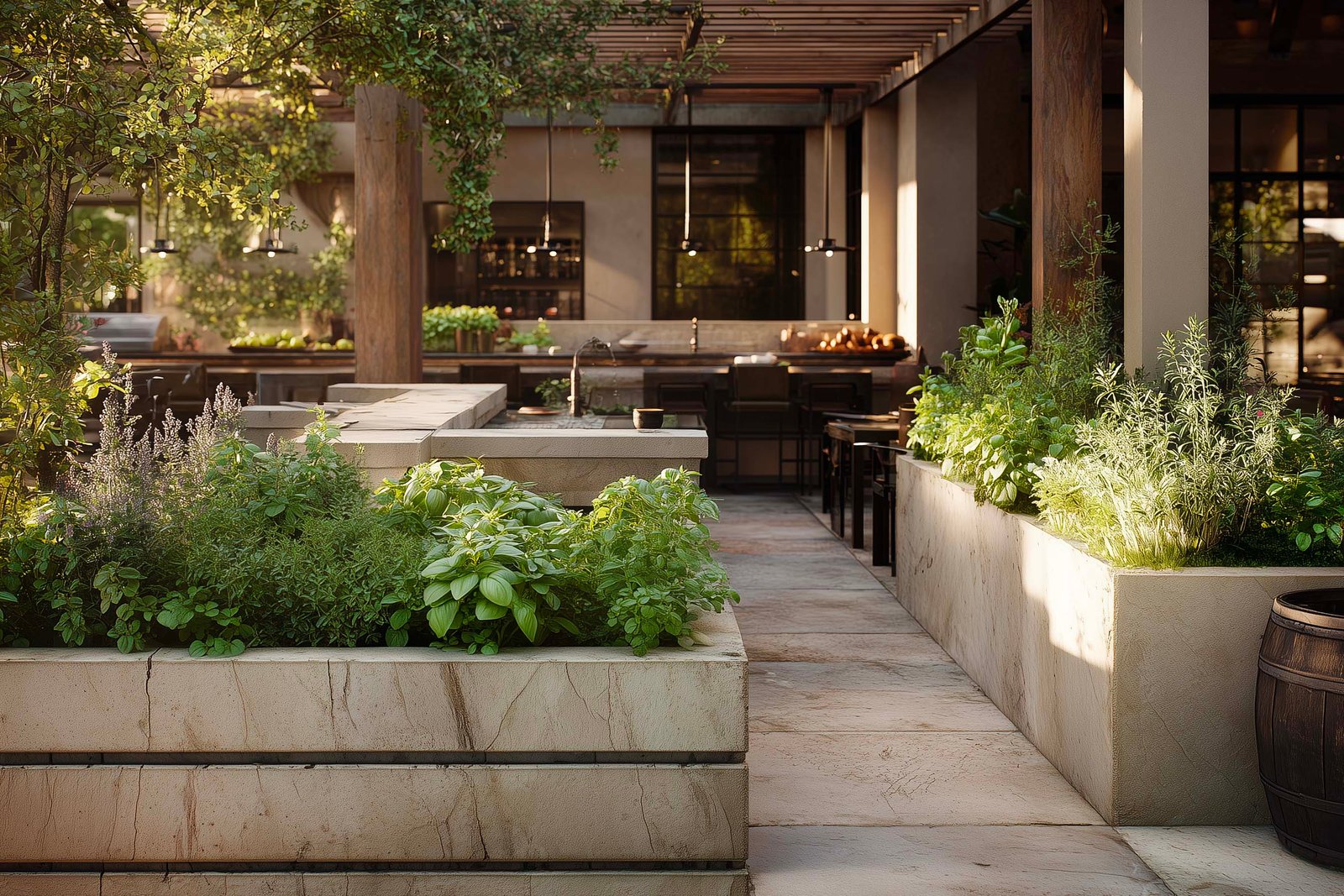
As guests move closer to the heart of the restaurant, botanical design becomes more interactive. Plants are touched, selected, cut, infused and transformed, engaging directly with culinary gestures and service rhythms.
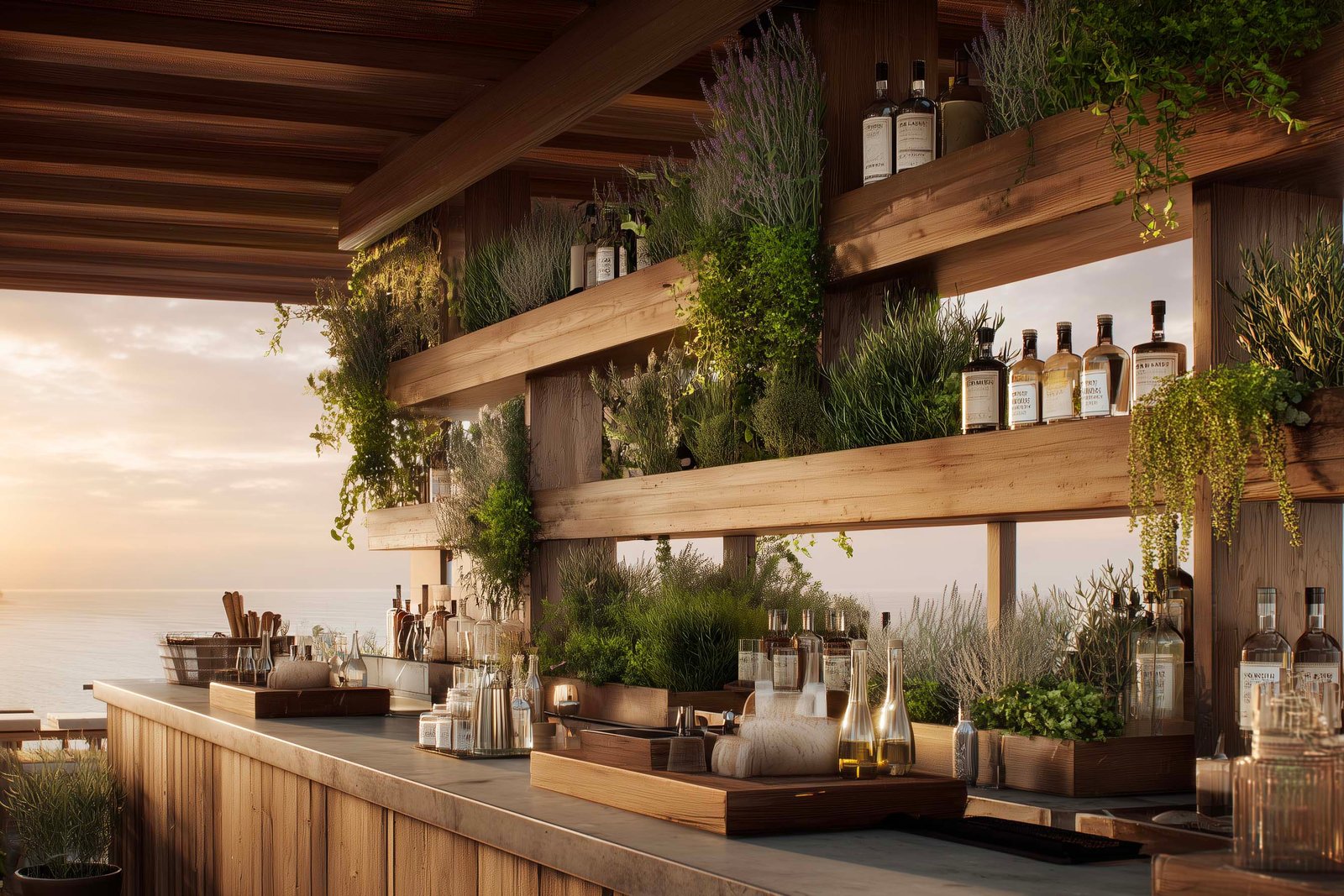
These moments are carefully choreographed. Not as performance, but as quiet rituals — pocket gardens, herb stations and apothecary-style bars acting as working interfaces between nature and craft.
Here, luxury is found in intention rather than display. Ritual replaces spectacle, and authenticity becomes the measure of refinement.
Botanical Rituals
Herb selection, infusions, quiet preparation gestures — where botanical design meets craft and creates memory.
Evening Atmosphere & Living Terraces
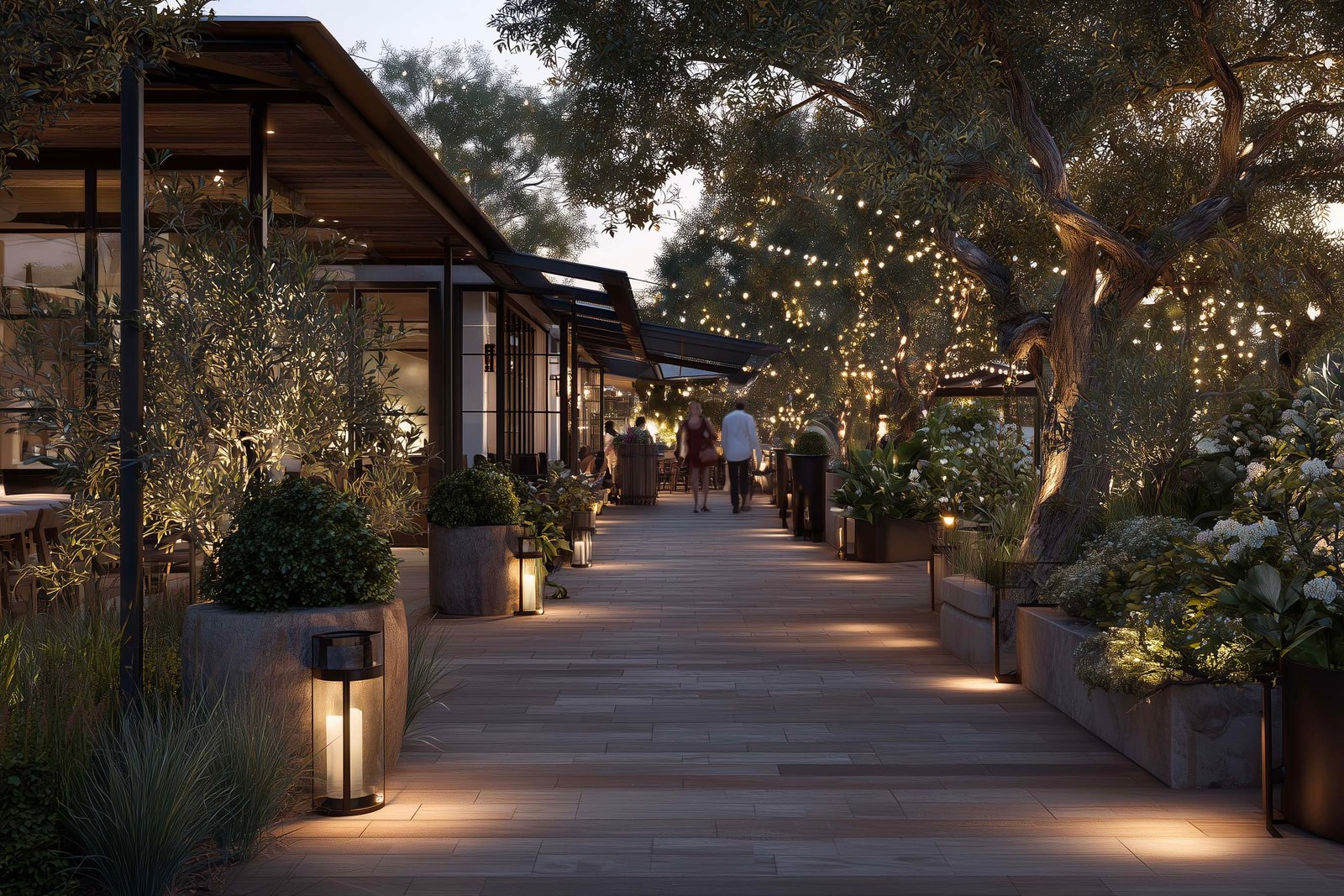
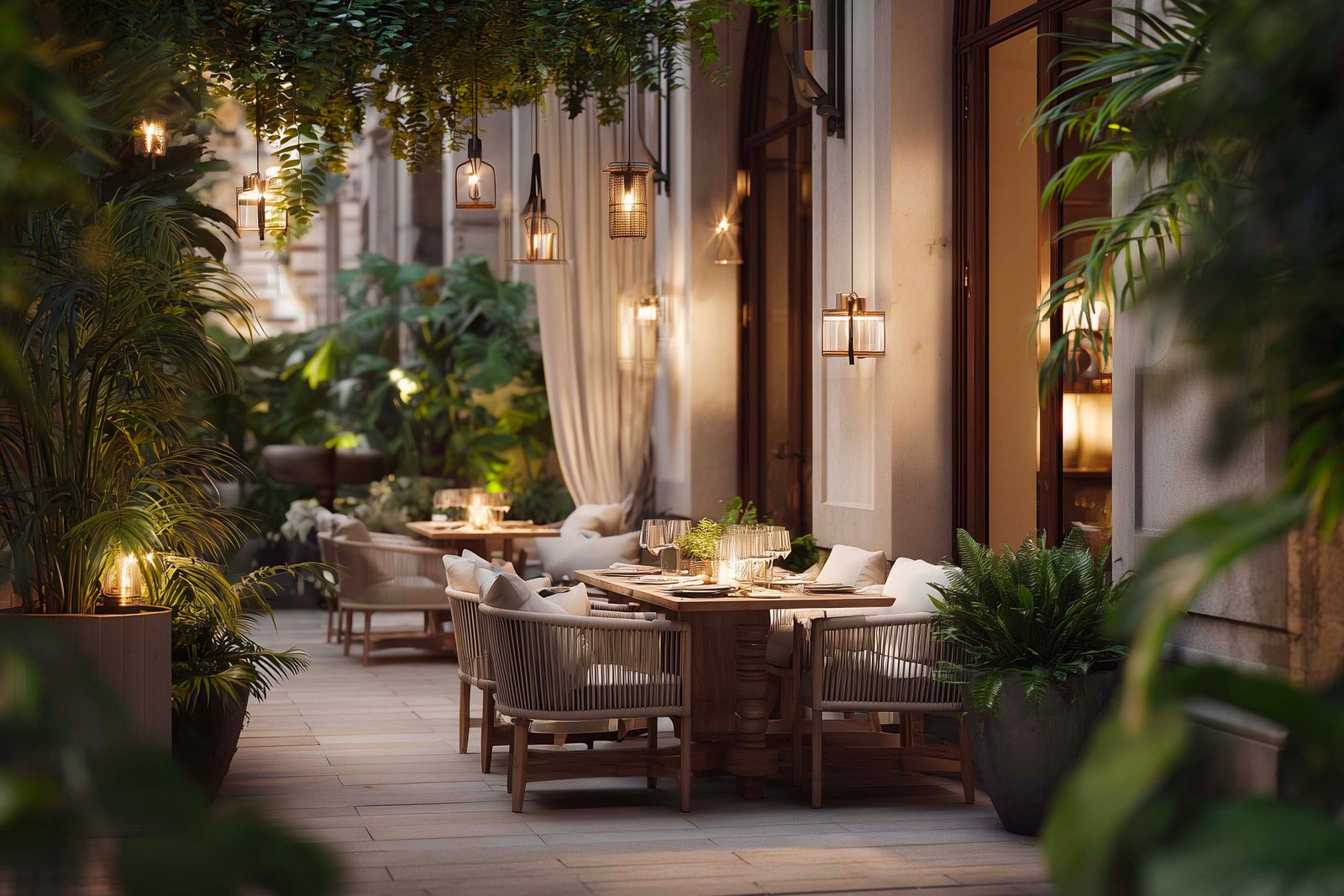
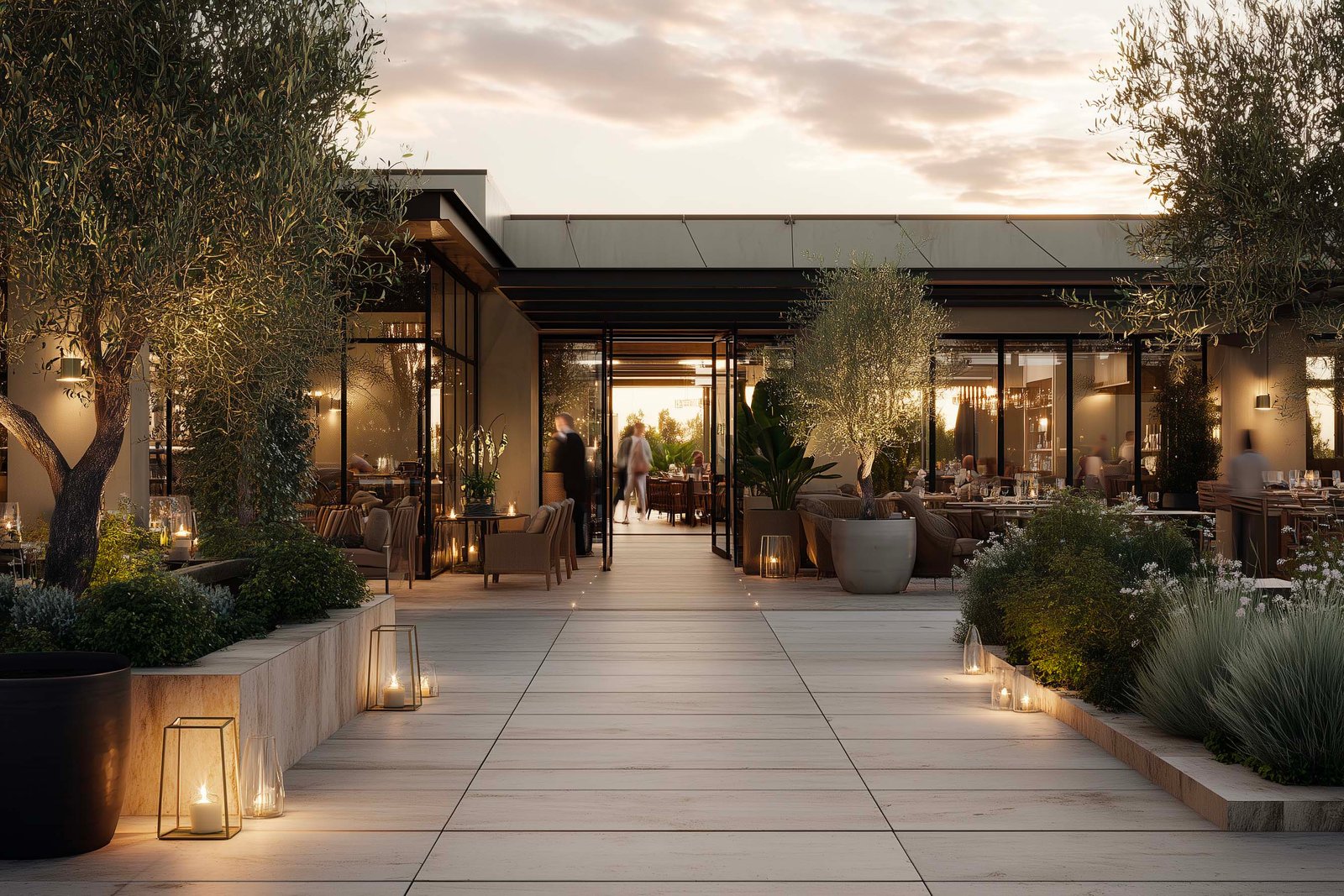
As daylight fades, botanical design takes on a new role. The garden becomes atmosphere — shaping light, rhythm and spatial calm. Evening is conceived as a moment of transition, where spaces soften and invite presence.
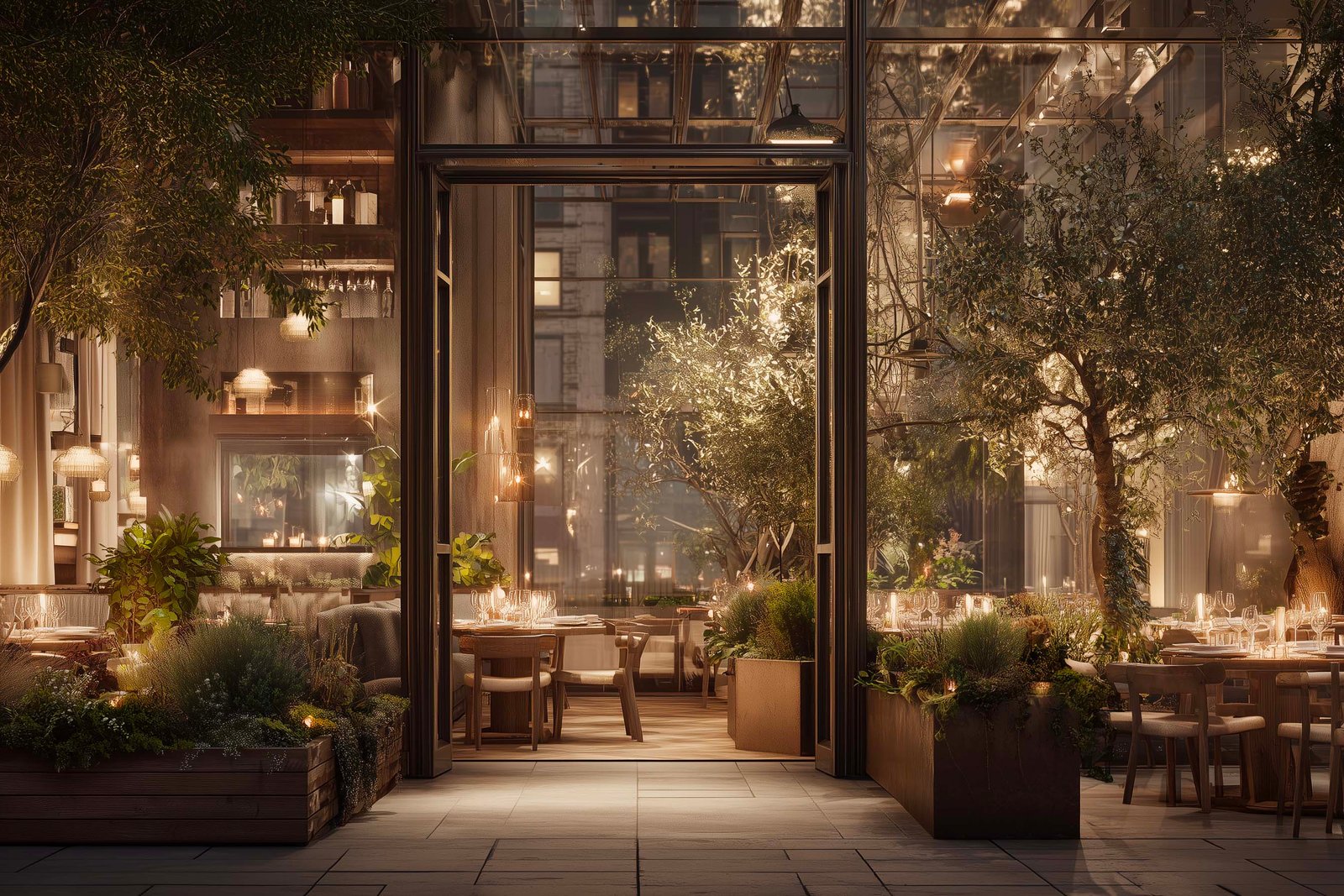
Terraces and interior–exterior thresholds are designed as living stages for arrival and anticipation. Aromatic plants, planted partitions and integrated lighting guide movement and create depth, shadow and continuity.
These living terraces establish a spatial threshold. Not through spectacle, but through restraint and balance, allowing architecture and vegetation to shape the evening together.
Evening Atmosphere & Living Terraces
When light softens and movement slows, botanical design becomes ambiance — guiding arrival, shaping thresholds and transforming terraces into living moments of calm and anticipation.
A Cohesive Botanical Culinary Journey
Taken together, these botanical interventions form a continuous culinary journey — unfolding gradually, intuitively and with intention.
Botanical architecture becomes the connective thread between architecture, cuisine and atmosphere. We do not design isolated elements, but relationships — between spaces, gestures and seasonal rhythms.
The approach favors coherence and restraint — allowing architecture, cuisine and plant life to operate as a single spatial composition.