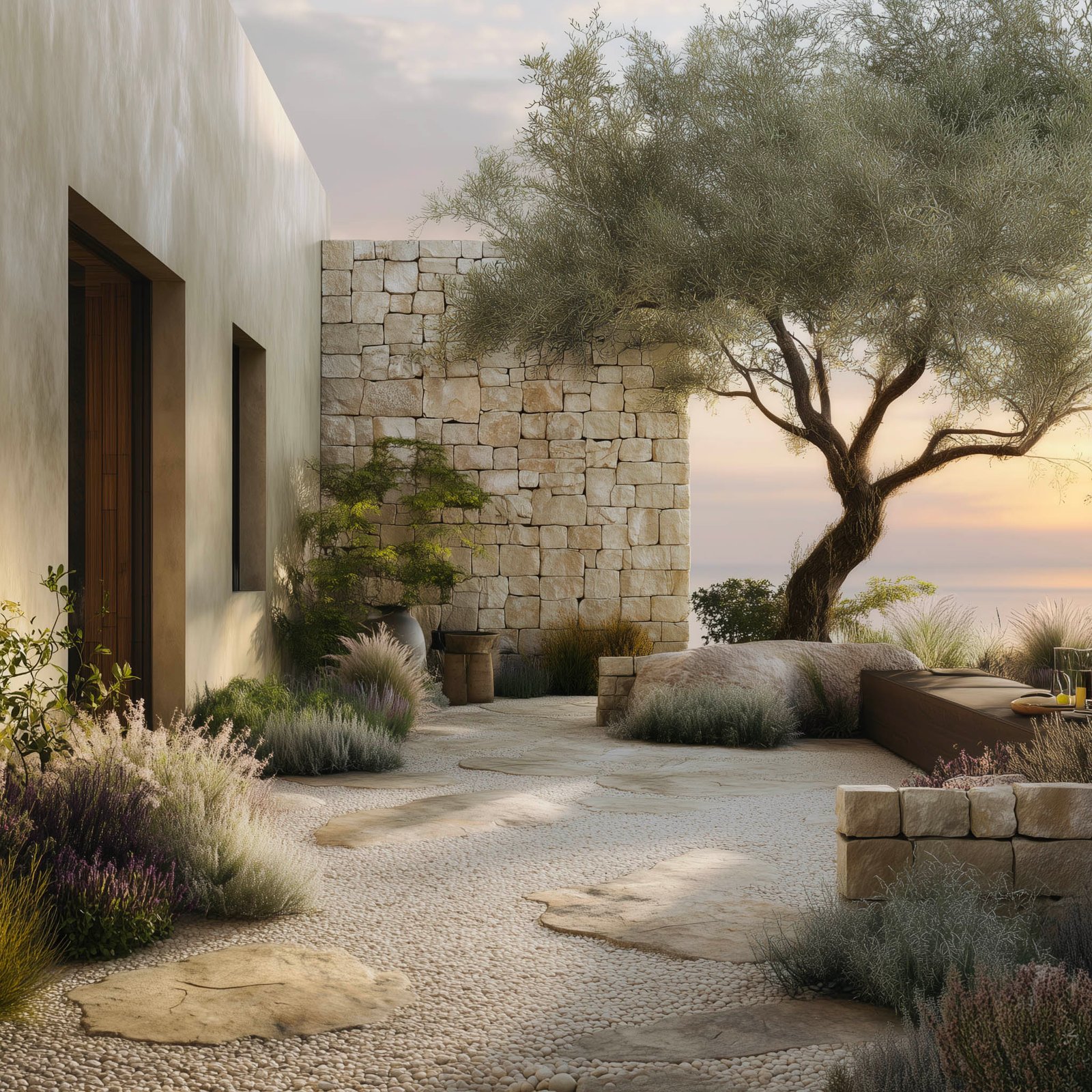
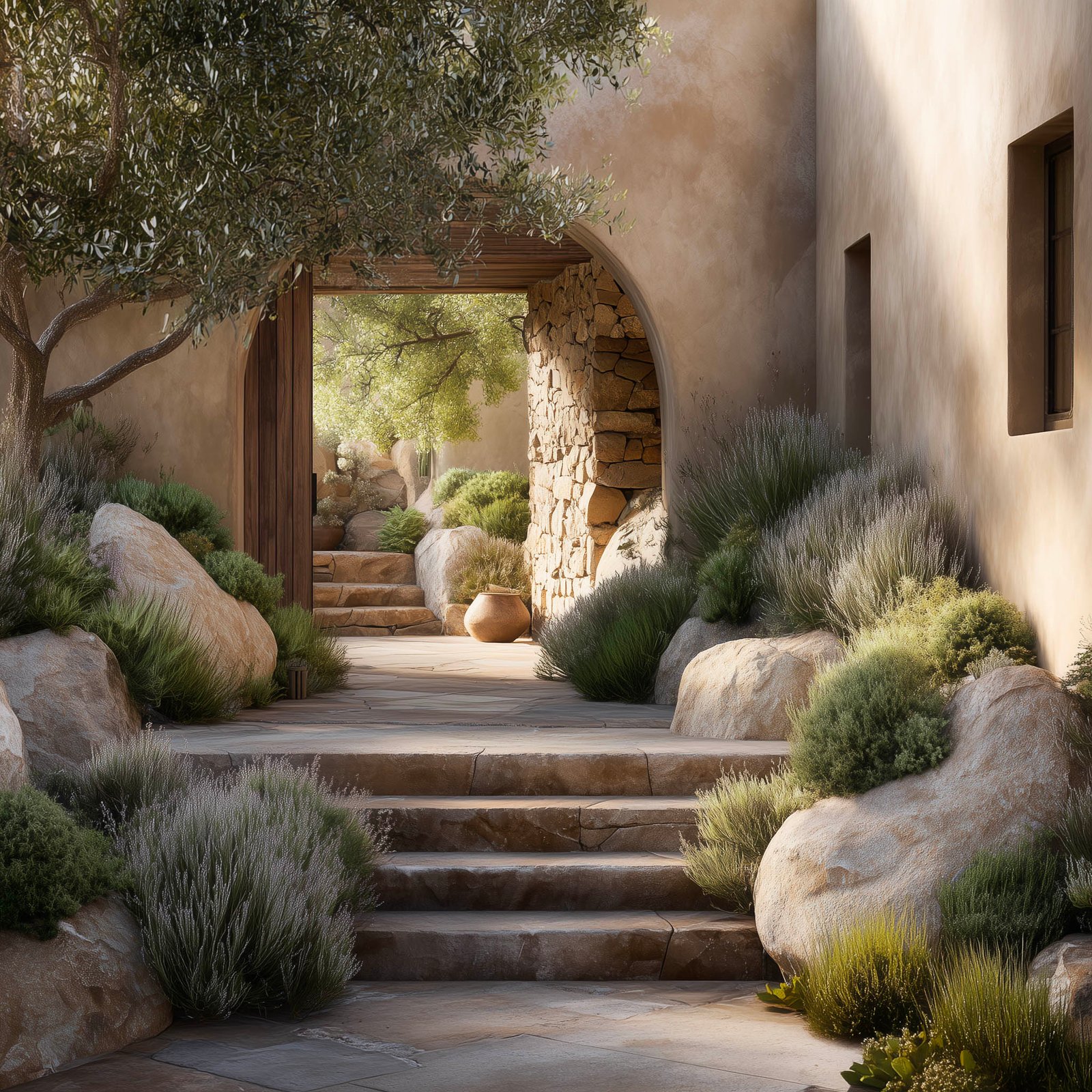
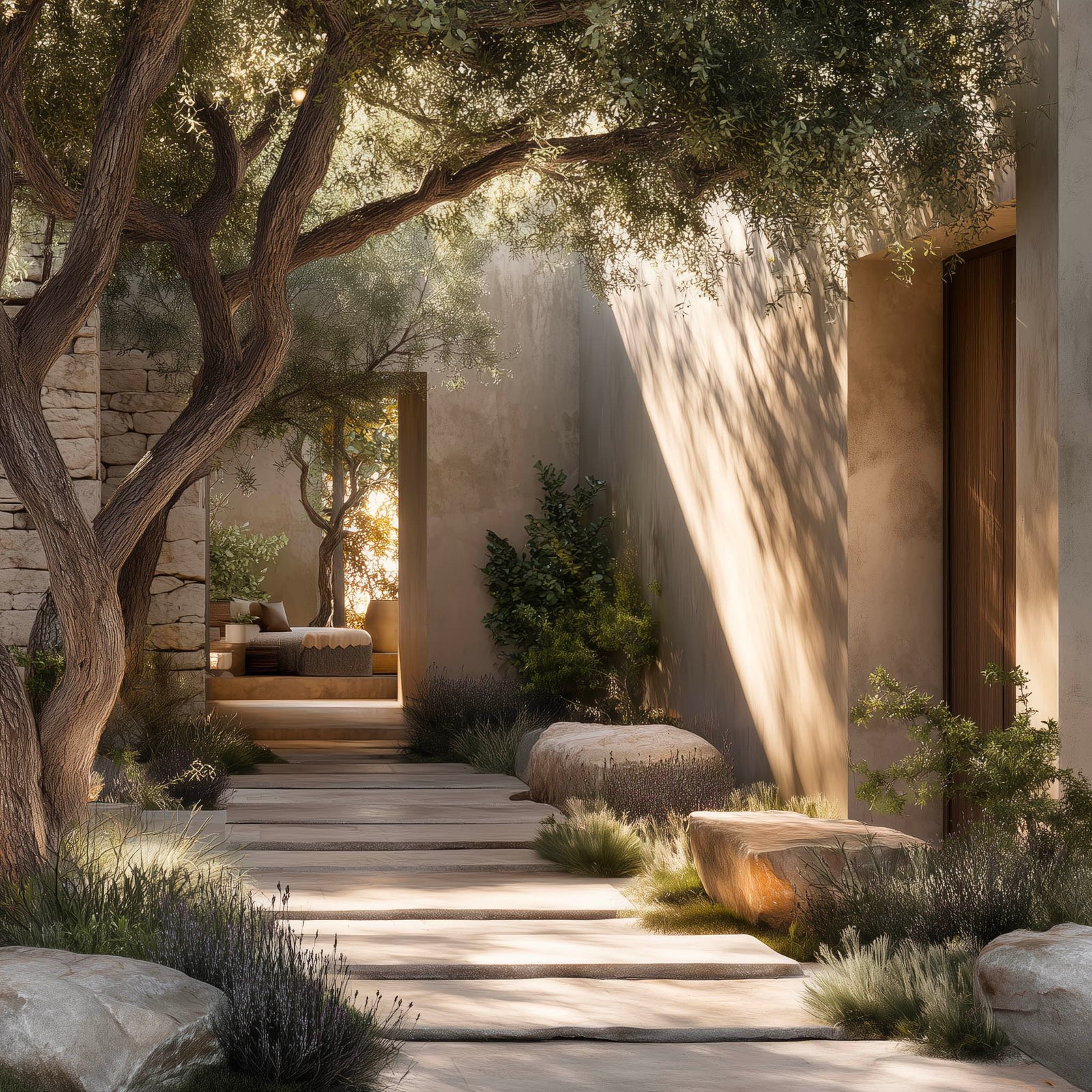
Just Proportions
At Paracelsus Gardens™, proportion is neither a mathematical rule nor a decorative principle. It is a condition of balance — what allows a space, a composition or a garden to find its place, its rhythm and its coherence.
The justness of proportions expresses itself as much in architecture as in the living. It connects volumes, voids, built masses and living presences, so that each element can fully exist without dominating the whole.
Proportion as an Architectural Language
In architecture, proportion structures how space is read. It organises heights, depths, openings and circulation, creating clear relationships between the body, the gaze and movement.
A well-proportioned space does not impose itself. It is understood intuitively, establishes a sense of evidence and calm, and allows for a natural appropriation of place. Justness is not spectacular — it is felt.
Proportion as Living Intelligence
In living systems, proportion is a fundamental principle. Growth, density, respiration, relationships to light and soil — plants always develop in dialogue with their environment.
Paracelsus Gardens™ translates this natural intelligence into botanical architecture. The size of a tree, the mass of a planted area, distances between plantings, the balance between fullness and void: everything is conceived as a dynamic equilibrium, destined to evolve over time. Proportion becomes a tool of dialogue between the built and the living.
Proportion as a Condition of Perception
The justness of proportions acts directly on perception. It influences sensations of openness or intimacy, protection or freedom, as well as relationships to time and use.
A well-proportioned place tires the eye less, soothes mental circulation and fosters a durable relationship between space and those who inhabit it. It is this invisible — yet deeply felt — quality that allows a project to endure without losing relevance.
Structuring Principles
- Human scale — the body and movement as primary references
- Balance of masses — relationships between fullness, void and respiration
- Architecture / living dialogue — proportions conceived as a living system
- Temporality — equilibria capable of evolving without breaking